
Technology
Bahadurgarh tops air pollution chart with AQI of 400, Delhi ranks 10th
By Marcus Chen
Advertisement · Why this ad?
Katherine oversees editorial operations across all six brands. Before joining The Meridan Group, she spent 14 years at the Minneapolis Star Tribune, where she led the metro desk through its digital transformation. She holds a Master's in Journalism from Northwestern's Medill School.
More from Katherine →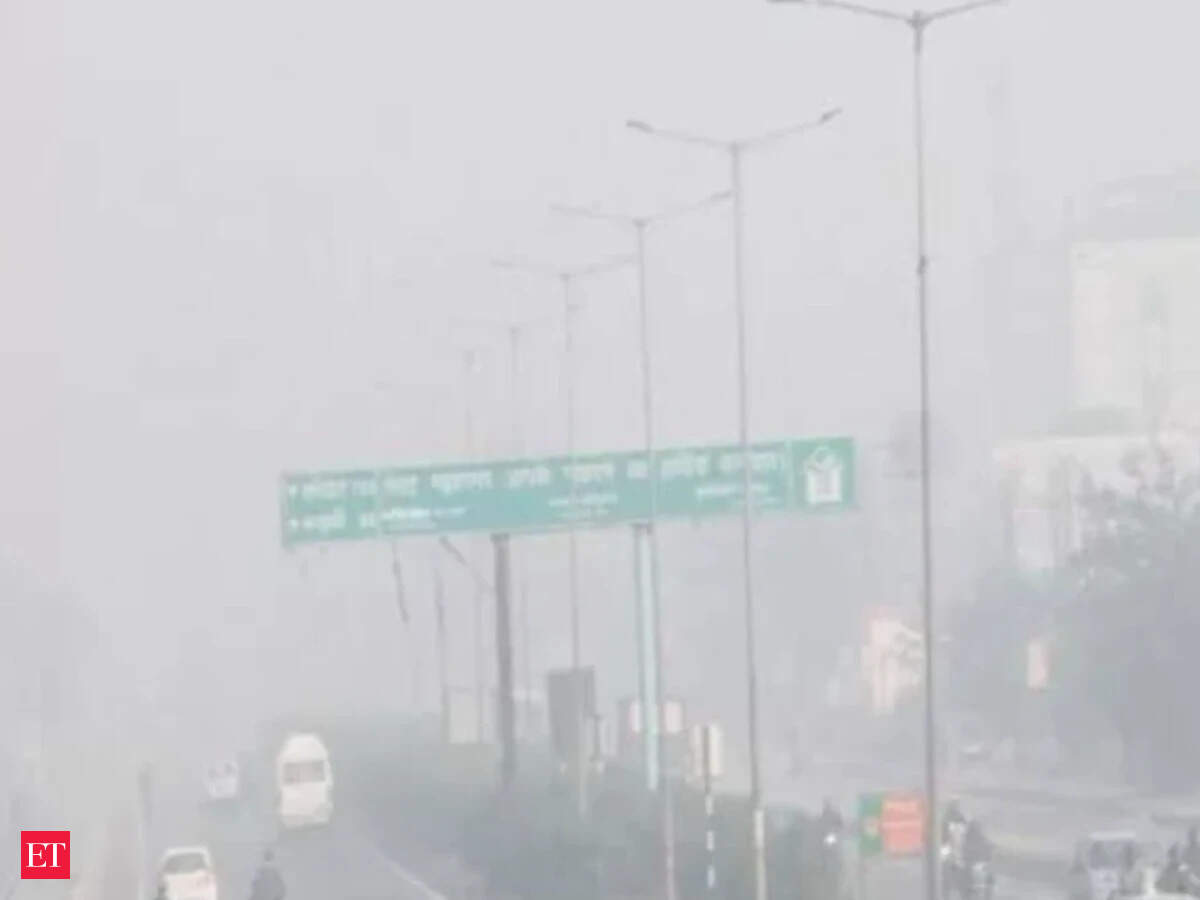
Agencies New Delhi: A thick layer of smog hung over parts of north India on Monday, a day after Diwali celebrations during which crackers were burst beyond permitted hours, pushing air quality to alarmingly high levels. Delhi, Haryana, Punjab and Western Uttar Pradesh's Air Quality Index (AQI) levels were well above 350, falling into the 'very poor' range. Also Read: 'Data eclipse': Questions over Delhi AQI data as several monitoring stations go offline on Diwali night On Sunday, Delhi recorded its most polluted Diwali in five years, with the average AQI at 376. The next morning, the AQI dropped marginally to 371, according to the CPCB. The overall AQI stood at 371 on Monday till 10 am, the highest for a post-Diwali day since 2021. Of the 51 monitoring stations that recorded data, 14 were in the 'severe' category, four in the 'poor' category and the remaining 33 in the 'very poor' category. Delhi Technological University (DTU) recorded the worst reading of 439. Earlier in the morning, the overall AQI was 370 at 8 am. Live Events According to CPCB data, Delhi's AQI was 376 on Diwali, the highest recorded on the festival day since 2021, when it was 382. Also Read: Mumbai bans sky rockets, aerial fireworks till November 25 after fire incidents However, according to real-time readings on AQI.in, Delhi's air quality climbed to 2,283 after Diwali. Six other Indian cities also recorded AQI levels above 1,000 at 9 pm on Sunday, according to the platform. On Monday morning, AQI.in recorded Delhi's air quality at 637, classifying it as 'hazardous'. According to IQAir, the concentration of PM2.5 stood at 170 micrograms per cubic metre, around 34 times the World Health Organisation's annual guideline value. The high AQI also pushed up PM 10 and PM2.5 levels in the national capital. The concentration of PM10 was 126 micrograms per cubic metre, while ozone levels stood at 31, nitrogen dioxide at 44.6 and sulphur dioxide at 32. Carbon monoxide concentration was recorded at 1,461.5 micrograms per cubic metre. PM2.5, fine particulate matter capable of penetrating deep into the lungs and entering the bloodstream, is among the major pollutants of concern due to its adverse health effects. IQAir's dashboard also showed a prominent air quality alert for Delhi, with data from 32 monitoring stations provided by 12 contributors. In Uttar Pradesh, the western region bore the brunt of post-Diwali air pollution, with several cities and localities recording 'very poor' air quality and some pockets in Ghaziabad, Meerut and Saharanpur reporting AQI levels in the 'severe' category, according to official and local data. Among the 24-hour average readings from November 8 to 4 pm on Monday, Noida recorded an AQI of 332, Greater Noida 252, Ghaziabad 324, Baghpat 305, Bulandshahr 303, Muzaffarnagar 225, Meerut 269, Shamli 275 and Hapur 202. In Meerut, doctors reported an increase in patients complaining of breathing difficulties, asthma, throat infections and eye irritation after Diwali. In Ghaziabad, the municipal corporation intensified mechanical road sweeping, water sprinkling and dust-control operations at identified pollution hotspots, City Health Officer Mitlesh Kumar said. The post-Diwali pollution levels were not uniform across the state. Among the places covered in the 24-hour readings, Bareilly recorded a comparatively lower AQI of 102 and Vrindavan 110. Fatehabad registered 138, Pratapgarh 141, Jhansi 144, Mathura 169, Firozabad 176 and Agra 187. Other major cities also recorded poor air quality, with Lucknow at 245, Kanpur at 221, Prayagraj at 241, Varanasi at 274 and Gorakhpur at 261. In neighbouring Punjab and Haryana, the air quality was in the 'very poor' category on Monday. According to the 24-hour average AQI, which is reported at 4 pm every day, Bahadurgarh in Haryana recorded 400, while Charkhi Dadri was at 389. The CPCB's data further showed that Gurugram's AQI was 345, Rohtak 378, Manesar 333, Faridabad 350, Ballabhgarh 316, Bhiwani 340, Kaithal 347, while Narnaul recorded an AQI of 305. The air pollution was so severe that many residents complained of breathing difficulty. Gurugram resident Praveen Bhardwaj said that when he stepped out of his home on Monday morning, he began to experience eye irritation and difficulty breathing. "I used to go for a walk in the park every morning. But now, due to the pollution, I'm afraid to even step outside. Many people are even having to give up their morning walks for the sake of their health", he said. Ashok Yadav, a resident of Sector-14, said pollution has become a cause for concern even for those who head out for morning walks. "Instead of merely issuing directives, the government and the administration should take concrete, on-the-ground measures to control pollution so that people can get relief," he added. In Punjab, the 24-hour AQI reading in Jalandhar and Mandi Gobindgarh was 336, in the 'very poor' category, while Ludhiana (292), Amritsar (257) and Patiala (221) were all in the 'poor' category. Chandigarh, the common capital of Haryana and Punjab, recorded an AQI of 148 in the 'moderate' category. Add as a Reliable and Trusted News Source Add Now! (You can now subscribe to our Economic Times WhatsApp channel ) Read More News on impact of fireworks on air quality north India smog levels Diwali celebrations air quality AQI levels in Delhi smog in India November 2023 health effects of air pollution pollution control measures in Delhi Delhi Technological University (DTU) (You can now subscribe to our Economic Times WhatsApp channel ) Read More News on impact of fireworks on air quality north India smog levels Diwali celebrations air quality AQI levels in Delhi smog in India November 2023 health effects of air pollution pollution control measures in Delhi Delhi Technological University (DTU) Prime Exclusives Investment Ideas Stock Report Plus ePaper Wealth Edition KYC and KYB: Inside Pidilite, the company that turned Fevicol into a word for a strong bond – Part 1 of 3 Seoul halts trading, Nifty has its best week since 2021: Money leaving the AI trade – will it land in India? Junk bonds are cracking at the bottom. Will the noise get loud enough to make ‘junk bond’ a household term again? PNG connections rise half a million, but how many use piped gas for cooking? Some elections matter more than you know: No crop changed in the fields, yet sugar, coffee and soya got cheaper in a day You can buy a walkie-talkie online. But can you legally use it? 1 2 3 View all Stories
By Marcus Chen

By Katherine Langford

By Katherine Langford

By Katherine Langford