
Technology
Meet Colette Kress, Nvidia’s New Interim CEO
By Katherine Langford
Advertisement · Why this ad?
Marcus manages the day-to-day editorial workflow across all brands, coordinating coverage assignments and ensuring editorial standards are met. He previously served as city editor at the Pioneer Press and holds a degree in Political Science from Carleton College.
More from Marcus →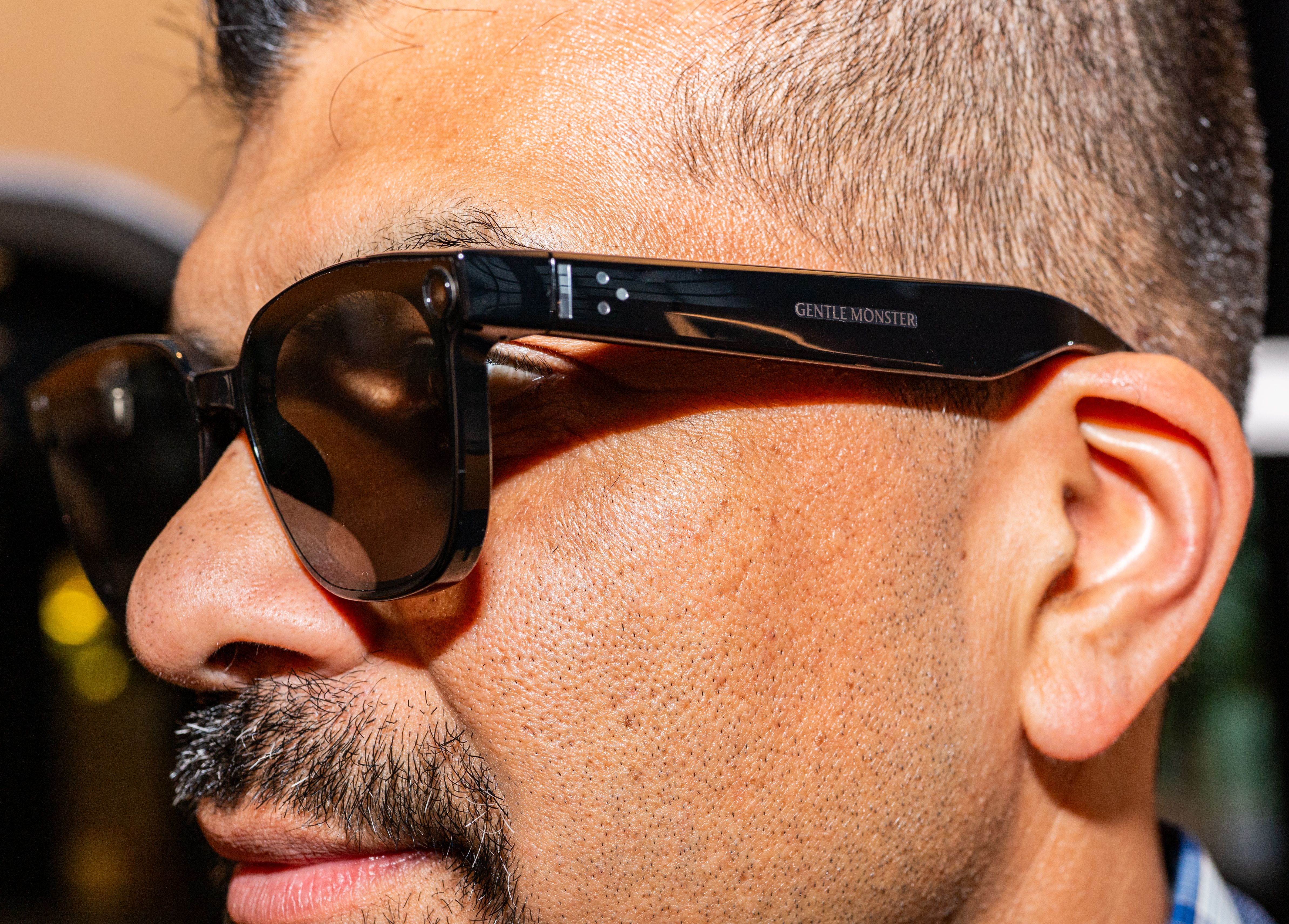
Save Story Save this story Save Story Save this story Google and Samsung's next face computers have arrived. Nearly two years after the companies first announced the Android XR platform that powers the hardware, the smart glasses are finally on sale. The “Intelligent Eyewear” is a collaboration between the two tech companies, with Samsung providing its hardware expertise and Google handling much of the software platform. Smart glasses are just one part of Android XR—there are also mixed-reality headsets and glasses for more immersive experiences, like last year's Samsung Galaxy XR and the upcoming Xreal Aura . Eyewear brands Warby Parker and Gentle Monster are heavily involved in the new smart glasses, responsible for the design and fit, similar to how Meta tapped Ray-Ban for its competing—and market-leading—wearables. Google and Samsung are leveraging Warby Parker and Gentle Monster's brick-and-mortar presence and retail expertise, which lets people demo the glasses before buying them. (Kering Eyewear, which owns brands like Lindberg and Maui Jim, has also signed up to make glasses for Android XR in the future.) The first models are available for preorder now, with official sales starting on December 10. Warby Parker's frames start at $395 and come in three styles—Alden, Reid, and Wren—as optical or sunglasses, with various prescription, lens, and width options. Gentle Monster's glasses start at $449 and come in six designs, various colors, and tints, with prescription options for most frames. The Warby Parker Alden. Photograph: Julian Chokkattu The hardware is identical across both brands. The glasses weigh around 41 grams (10 grams less than Meta's new Gen 3 glasses ), have a nine-hour battery life, and include a charging case that can recharge the glasses up to seven times. They have a 12-megapixel camera with an LED indicator that shows everyone in eyeshot that you’re recording. There’s a button to capture photos and 90-second videos at up to 3K resolution with a press. A touch-sensitive temple piece lets you tap to activate the onboard Gemini assistant, or slide two fingers back and forth to control the volume of the audio coming out of the glasses' speaker. They are the first devices to support the “Hey Gemini” hotword, though you can use the well-known “Hey Google” hotword if you'd like. Still, the new spoken wake phrase distinguishes the glasses as Gemini's “optimal form,” according to Juston Payne, Google's senior director of product management for XR. “We felt that these are a Gemini-forward device,” Payne tells WIRED. “It's really you and Gemini going through your day together, so it was feeling a little dissonant for us. You're not talking to Google, you're talking to Gemini.” Oddly, these glasses are only compatible with certain devices— Google Pixel phones , Samsung Galaxy phones , and iPhones —and only select models. You'll need a Pixel 7 or newer, Galaxy S or Z Fold running Samsung's One UI 9.0 or higher, and the iPhone 13 Pro or newer. A Google spokesperson tells WIRED the company will share more about how it plans to expand support to other phones in 2027 after launch. The arms of the glasses are similarly thick. Photograph: Julian Chokkattu Since you'll be buying the glasses from an eyewear brand, they will be the customer-facing party to handle any problems you may have with the device or prescriptions. On the backend, Payne says there are elaborate business integrations and handoffs, so the customer service workload is split between all the companies. Google has already previewed Intelligent Eyewear glasses with displays built into the lenses—useful for showing navigation instructions or real-time captions for folks with hearing issues. However, they are not ready yet; Payne says they're currently being tested by “non-Googlers” and are still on the road map, though he didn't share a specific release window. As for plans to launch audio-only smart glasses, like Meta's recent Ray-Ban Audio , Warby Parker co-CEO Dave Gilboa tells WIRED, “There's a pretty robust pipeline of additional products.” What Can They Do? Smart glasses have been around for a few years, but they come in many forms. Unlike display smart glasses designed to plug into a laptop to mirror or extend your screen, or more immersive glasses like Meta's VR Glasses , which layer virtual experiences over the real world, Intelligent Eyewear is more akin to what Google pitched years ago with the original Google Glass . You can hear notifications pipe through from your connected smartphone and respond to messages by speaking to Gemini. You can listen to music, take phone calls, and get audio navigation through Google Maps. Yes, you can snap photos and videos too, though Payne quickly notes that these glasses are designed more to have Gemini assist you throughout the day than to capture content. That's likely because Meta has faced public scrutiny over how people use its smart glasses, so much so that it has spawned a new term for people wearing them: the Meta Creep (harkening back to when anyone wearing Google Glasses was called a “ Glasshole ”). “We learned through Glass that you can make people uncomfortable if you're not clearly communicating,” Payne says. To that end, Google is announcing a series of policies and features alongside the glasses to assuage concerns. They include tamper detection, so the camera will know if you tried to disable the indicator light. If you try to block the indicator light while recording, the camera will stop. When you ask Gemini to look at something, those visuals are not saved in your Gemini History, and Google says it will not use them to train AI models or target ads. The glasses will automatically redact the faces of people around you before Gemini processes the visual data. We've highlighted all of Google's privacy-focused announcements around its glasses in a separate story . Gentle Monster's Intelligent Eyewear comes in six different styles. Photograph: Julian Chokkattu Most of the features that Google is positioning around Intelligent Eyewear rely on Gemini. See a poster for a comedy show? Just ask Gemini for more information, or add it to your calendar. You can ask Gemini to add items to your shopping list or whip up a travel itinerary with hotel recommendations and save them to a note. Some of these are saved in the Gemini app, but it can leverage other apps on your smartphone. For example, Gemini can play music on Apple Music if you're on an iPhone. And if you use Samsung Notes on a Samsung phone, it'll know that's where you likely want your notes saved. When you activate Gemini, it's technically a “ Gemini Live ” experience, meaning the assistant activates and you can have a free-flowing conversation. A swipe back on the glasses' arm will end the interaction. When you want it to “look” at something in front of you, be specific in your query; otherwise, it won't use the camera. You can ask it to look at a page in a book and summarize the content, or if you have a bunch of cocktail ingredients in front of you but don't know what to make, you can ask Gemini for suggestions and step-by-step instructions to craft a drink—at your pace. Some Gemini controls are on-device and don't need to travel to the cloud, like asking the assistant to play the next track. Speaking of, early next year, Google says users can use gestures on devices like the Fitbit Air or Google Pixel Watch to control music playback or activate Gemini on the glasses right from their wrist. Another big capability is translation. Gemini will automatically detect languages and translate them to your preferred tongue. You do need to stare at the individual to hear their words translated, and there's a limited range; the quality depends heavily on the environment and noise level, but it worked remarkably well in my controlled demos, with only a few errors. The translation tries to mimic the speaker
By Katherine Langford

By Katherine Langford
By Katherine Langford

By Marcus Chen